Astrology for Creatives
Astrology as a studio tool for your creative practice
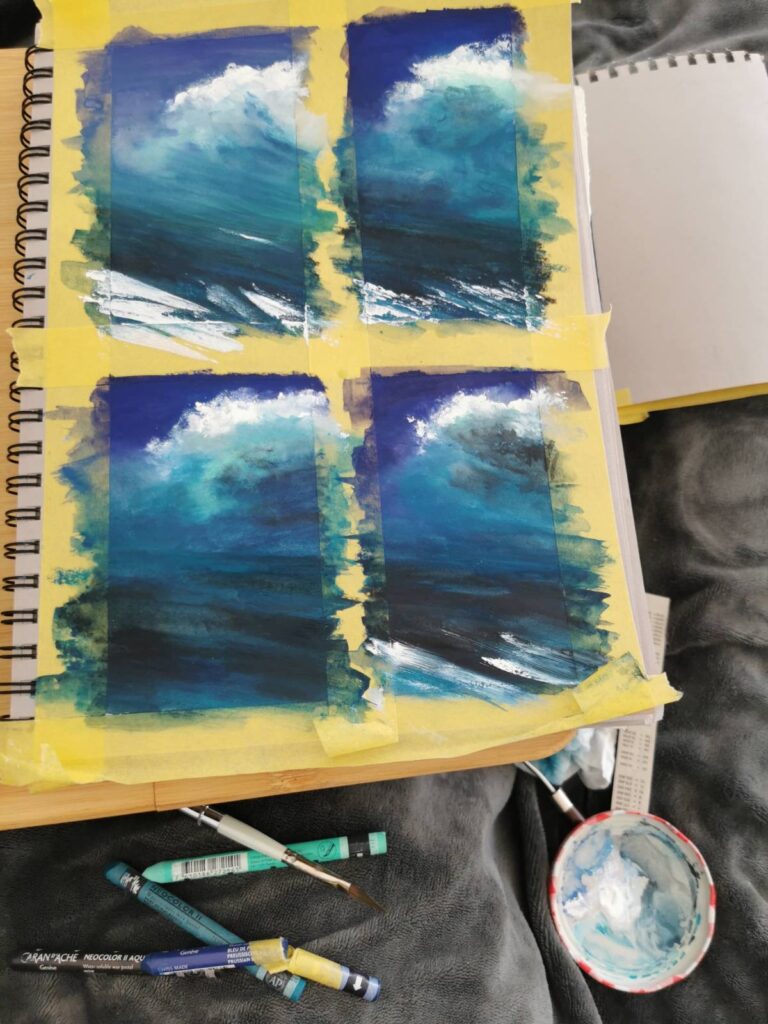
Astrology belongs in the studio because making is a complicated ecosystem, where inspiration is only the beginning.
It is about the hand, the tool, the body, the material, the nervous system, the room, the schedule, the interruptions, the appetite to begin, and the ability to return when the path forward feels foggy.
Astrology for Creatives is the part of my practice devoted to helping creative practitioners understand how they actually create: what supports the work, what tangles it, what helps it move again, and how to build a practice that is sustainable under the real conditions of your life.
In other words: this is astrology that enters the studio.
Studio tools for your creative practice
Temperament and Timing
A personalized written study of your creative disposition and the rhythms of the next twelve months. Understand your natural pace, the conditions that sustain your work, and how to adjust your practice as the year unfolds.
12 experimental commissions · $147 · 6–9 personalized pages. Online checkout is being prepared.
The Creative Court Report
An in-depth written exploration of the planetary faculties involved in making and the agreements that help them work together. Commissions are currently closed while I update the reports. You can still explore the original report and read clients’ experiences.
Why traditional astrology?
I work with traditional astrology because it offers a worldview that is deeply useful for creative practitioners.
Traditional astrology is deeply concerned with embodiment: the hand, the tool, the craft, the conditions we are living under, and the way a human being acts within the life they have been given.
That’s because in the Hellenistic worldview, astrology was rooted in immanence: the understanding that spirit and daily living are not separate, and that what you do with your life is in direct relationship with the spirit moving through it. This tradition was built to help human beings live as spiritual beings in a material world — to work with what they are given, understand the conditions they are living under, and enact agency within them.
That is profoundly practical for makers, because the ancient astrologers were deeply interested in craft: the body at work, the hand, the tool, the rhythm, the friction, and the way a person acts upon matter. That thread runs from Hermes Trismegistus through Nechepso and Petosiris, and onward through Ptolemy, Vettius Valens, Firmicus Maternus, and Dorotheus of Sidon.
Traditional astrology asks practical questions, such as…
- What are you working with?
- What tensions are present?
- What supports are available?
- Where is there friction, and how might you respond to it with more intelligence and agency?
These lines of inquiry are vital for creative practice, because making is not theoretical!
It is a lived negotiation between vision and matter. Between desire and stamina. Between taste and skill. Between longing and the ordinary conditions of a day.
Traditional astrology helps me read the chart in that same grounded way. It unveils a complex and nuanced story of the rhythms, contradictions, instincts, needs, and workarounds that shape a maker’s real process.
So when I bring astrology into the studio, I might ask…
- How do you begin?
- How do you return after interruption?
- What kind of material engagement feels alive to you?
- Where do you freeze, rush, overwork, avoid, or abandon?
- What does your body need in order to keep making?
- What kind of practice is native to you, rather than borrowed from someone else?
These are questions that astrology helps us explore with depth and precision.
My approach
Over years of study, research, one-to-one client work, and trial in my own studio, I have developed an original framework that translates traditional astrological principles directly to the physical workbench.
It is rooted in the historic lineages of traditional and Hellenistic astrology, but it is not an off-the-shelf reading style pulled unchanged from a textbook. I have synthesized those doctrines into a framework for creative practice, from painting and drawing to writing, music, textiles, and work that moves between disciplines.
At the heart of this work is a simple conviction: a creative practice becomes more workable when you understand the actual inner and outer conditions under which it can thrive.
That means this work is not about passive navel-gazing. It is about proactive nurturing.
The chart can help reveal where your making-life needs more rhythm, more permission, more structure, more sensuality, more courage, more rest, better material choices, clearer roles, or different expectations. It can show where one part of you wants speed while another needs patience. Where one part wants beauty and softness while another wants precision or force. Where the body needs a workaround instead of a fantasy.
And once those things are seen clearly, they can be responded to.
The purpose of this work is to offer practical insight, useful language, and grounded suggestions that help nurture a creative practice under real-world conditions.
Who this is for
This work is for people who paint, draw, write, make music, work with textiles, sculpt, make ceramics, or move between disciplines. It is for creative practitioners who want to understand and sustain the work they care about.
It is for people who are willing to practise and experiment, and want practical tools for developing their work.
It is for people building a practice around paid work, family, illness, or other commitments.
It is for the artist who keeps imitating other people’s routines, materials, or methods because they do not yet trust their own.
It is for the person who knows something is not quite right, but cannot name why the practice keeps freezing, collapsing, or becoming unsustainable.
It is for people who want to understand their working rhythms, solve practical problems, and build toward a body of work they care about.
Why trust this?
I have 8 years of experience as a professional astrologer and have conducted more than 1,500 one-to-one consultations.
But perhaps more importantly, I am a physical maker myself.
I know what it is to love making and lose touch with it for a long stretch of life. I know what it is to come back under completely different conditions than the ones you imagined for yourself. I know what it is to build a practice around chronic illness, material limitation, changed capacity, and the ongoing need to adapt. I also live and have worked with neurodivergent individuals who navigate their own creative hurdles.
So this work is not built for fantasy lives! It is grounded in real, complicated ones.
That is why I care so much about usefulness.
I am not interested in astrology as decoration, superiority, or spiritual bypass. I am interested in whether it helps a maker understand themselves more clearly and support the work more wisely.
If you would like the fuller story of my background, painting practice, and astrological training, you can find that on the Meet Amaya page.
Astrology as a studio tool
I am developing a body of practical astrological tools for people who already make things and want to develop their creative practice. These resources bring traditional astrology into the decisions you make about your work: how you practise, how you pace a project, what supports sustained effort, and how you respond to changing conditions.
The Creative Court explores the planetary faculties involved in making. Temperament and Timing examines your overall creative disposition and its changing expression through the year. Each offers a different perspective that you can apply to the work you want to make.
Further teaching and written resources will develop this framework over time. You can follow that work through Letters from Skylight Studio.