An eight-week live Venusian container
Spinning Gold
An eight-week intimate container for makers who want to develop enough trust in their taste to choose processes, materials, influences, and projects capable of sustaining their desire to continue.
Built for painters, illustrators, photographers, poets, textile and fiber artists, collage and mixed-media makers, printmakers, ceramicists, sculptors, book makers, and people whose work moves between forms.
Saturdays, October 3–November 21, 2026
1:00 p.m. Eastern / New York time
Twenty places
Enrollment closes October 10
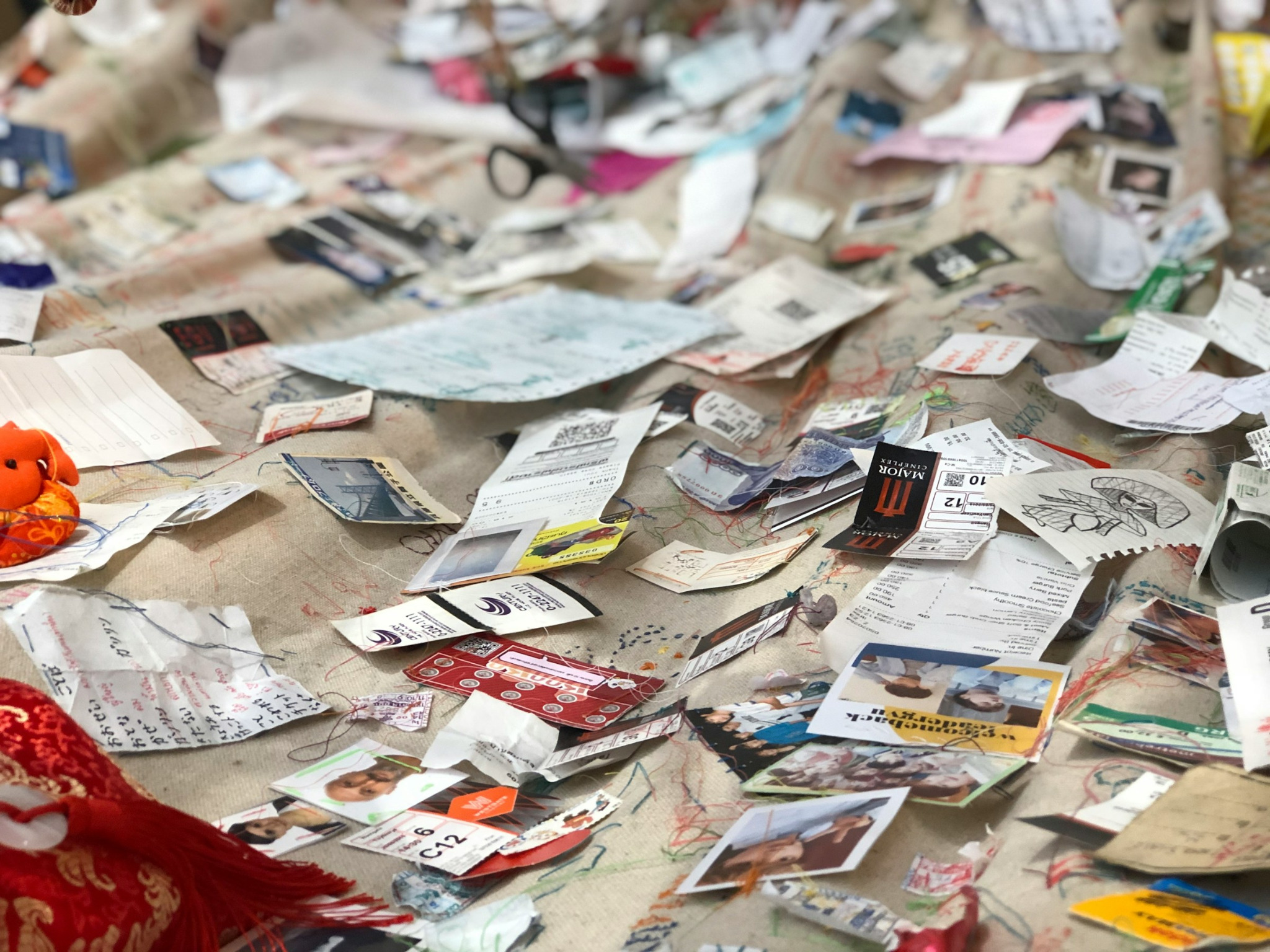
Before you decide what kind of artist you are, something gets your attention.
You see a paint color and immediately want to know its name. You take four photographs of the same wall because the light has changed the pattern of shadows on the plaster. You hear six notes in a song and continue thinking about them for the next eleven years. An artist’s work makes you feel jealous in a way that is almost embarrassing. You pick up a piece of cloth in a shop, rub it between your fingers, put it down, and then walk back for it ten minutes later without any idea what you are going to do with it.
The Greeks had a word for the desire that seizes us this way: himeros.
In the Homeric Hymn to Aphrodite, Aphrodite usually sends this force through the world. She causes gods to mingle with mortals. She moves through birds and animals and people. Then Zeus turns her own power upon her. Aphrodite sees Anchises tending cattle on Mount Ida and is seized by the same desire she usually creates in someone else.
She does not sit down and make a sensible list of reasons to want him. The sight of him produces desire before she has decided what the desire means or what it will require of her.
Most makers know what it is to want to move closer to something before they know what they want to make from it. You do not reason your way into loving the thing. It gets your attention first, and your desire to move closer gives you a reason to begin learning.
The trouble is not that these moments have never happened to you. The trouble is that they happen in the middle of a life that is very good at interrupting them.
Something catches you, and almost immediately the questions begin. Is this useful? Could I sell it? Is it real art?
Would becoming good at it make me look like the kind of artist I want other people to see?
Before you have spent ten minutes with the desire itself, it is being asked to justify the time, money, difficulty, and public identity that might come with following it.
Sometimes we confuse admiration with instruction. You can admire the command another artist has over a difficult material without wanting to spend your own life developing that command.
You can love the audacity or technical precision of the work and still feel bored, cramped, or miserable when you try to make that way. You can be drawn to the attention surrounding an artist and mistake that attention for evidence that you should want what she has made.
And we carry ideas about what counts. The strange little collages you want to make do not feel serious enough, so you sign up for a course in observational drawing. The poems come easily, which makes you suspicious of them, while the technically impressive thing that leaves you cold receives all of your discipline.
You keep focusing on the appearance of what an artist should be (usually based on other peoples’ ideas and definitions), instead of paying attention to what you cannot stop loving.
So you save the image and keep scrolling. Or you rush toward the nearest recognizable version of the desire: the fashionable material, the impressive artist, the class that promises a finished project.
There may be a real strand of attraction inside that choice, but you have not yet worked out which strand it is. When the material arrives, you may discover that you do not enjoy touching it. When the class ends, you know how to make the teacher’s project and have no idea what you want to do next.
Another day ends without you making much at all. There were too many possible directions, no way to choose between them, and nobody standing beside you with the next instruction.
Or you did make something by following another person’s method exactly, and the result does not feel like yours.
This makes practice very difficult. Practice toward what?
Repetition is easier to tolerate when it is carrying you toward something you love. When the only aim is to become skillful enough, impressive enough, legitimate enough, every bad drawing or awkward first attempt feels like evidence that you are failing to become the artist you had in mind.
The desire was already difficult to trust before the practice began. It has been judged, moderated by somebody else’s opinion, and pushed toward whatever looks most recognizably artistic from the outside. It has not received enough of your attention for you to know what it is asking you to move toward.
The room full of possible selves
For a long time, I had a box.
The box came down whenever I bought a class or tutorial. I would work at the thing for a few weeks. Sometimes I completed every assignment and then lost all momentum when the instructions stopped.
Sometimes the material felt terrible in my hands, even though I loved what somebody else could do with it. Sometimes I became frustrated by my own lack of skill and quietly moved on before I had to see too much evidence that I was not naturally good at it.
Everything went back into the box.
At one point I owned somewhere around five hundred watercolors. I had six or seven brands of graphite pencils, which is an absurd collection for someone who eventually had to admit she did not like working in graphite. Once I made that discovery, I immediately began looking for the right charcoal.
I had watercolor pencils and markers, gouache, stacks of paper, more brushes than I could reasonably use, and all the materials belonging to different artists I might become one day.
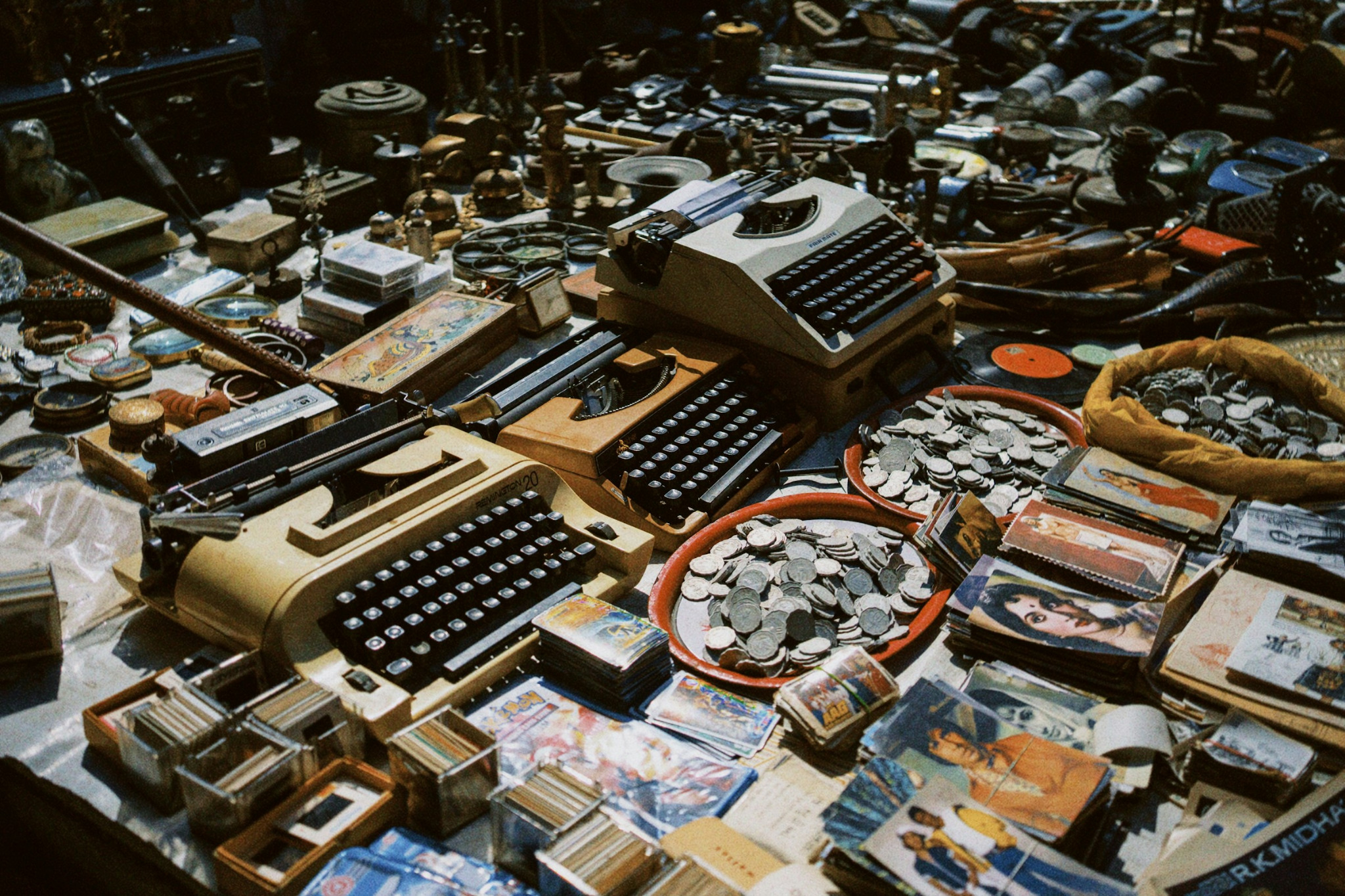
I was not buying these things thoughtlessly. I was trying very hard.
I believed that if I took the right class or found the right material, the work might finally come out of me looking the way it looked in my head. One of these purchases would shorten the distance. One of these teachers would help me skip the humiliating middle where I knew what good work looked like but could not make it yet.
I wanted to make myself impregnable to anything uncomfortable or painful or challenging, before I began showing up as an artist.
There was also real pleasure in the buying. A new material gives you a clean beginning. While you are comparing pigments or waiting for a parcel to arrive, you get to feel the anticipation of making without having to confront a surface that may not cooperate with you.
The possible painting is still perfect. Your future relationship with the material contains no disappointment yet.
And if you have the money, buying something is one of the easiest ways to give yourself temporary permission. The supply proves that you intend to make. The class puts creative time on the calendar. For a few weeks, your desire receives a legitimate place in your life.
Then the temporary structure disappears, and the supplies remain.
I know makers who have an entire craft room they avoid entering because opening the door means standing in front of every month and year they did not make, surrounded by several hundred pounds of evidence that they meant to.
There is a digital version of this room too. Thousands of saved images across four platforms. Books bought with real conviction and never opened. Tutorials bookmarked for the day you are finally ready. An ideas folder that became so large you started another ideas folder because finding anything in the first one was impossible.
It is easy to look at this accumulation and see waste, inconsistency, or a lack of discipline.
The accumulation usually begins in real desire.
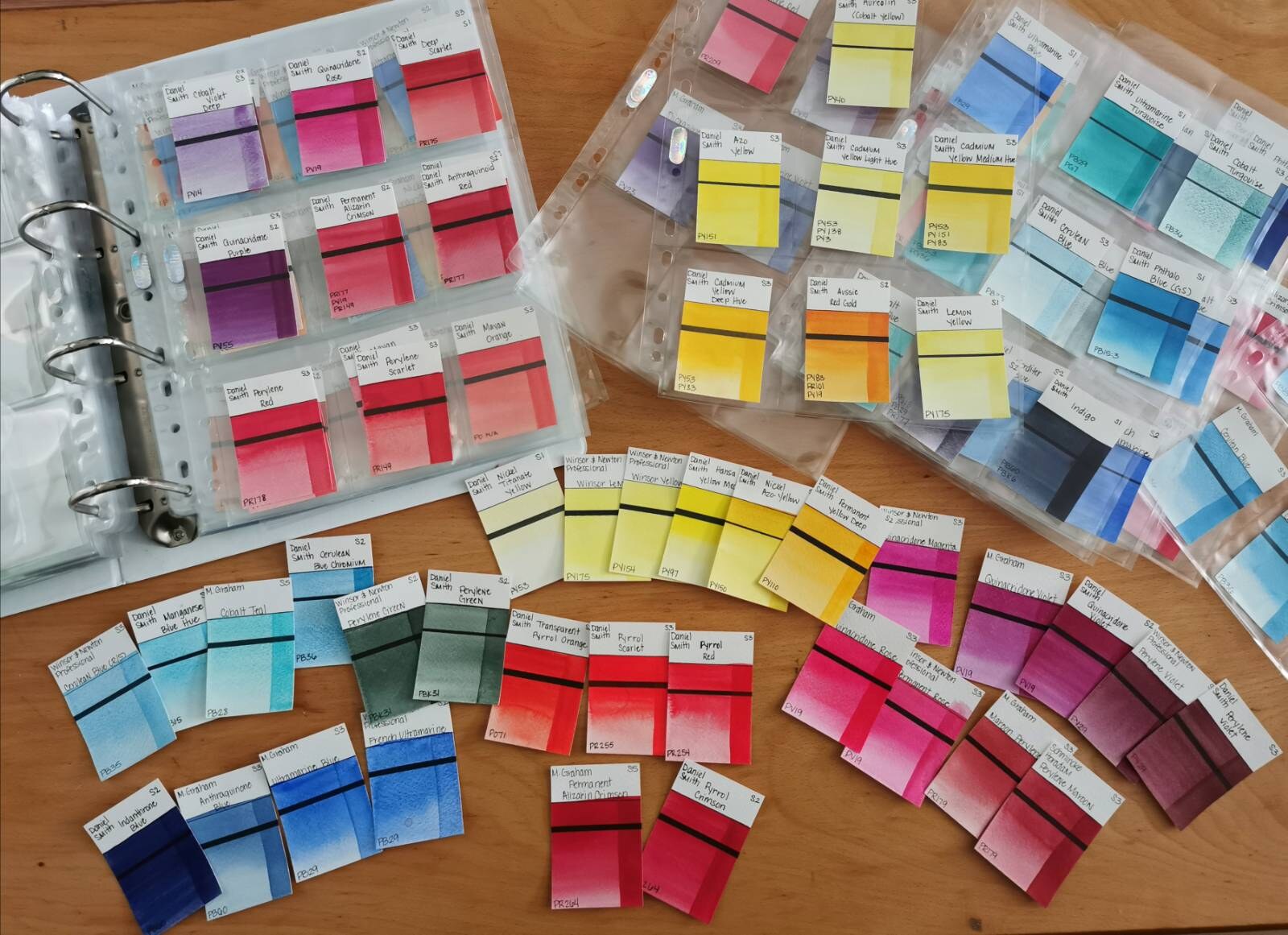
By the time I finally stopped acquiring watercolors, this book contained more than 500 different paint swatches. I literally treated them like Pokémon cards.
There was often something true inside the attraction: a color relationship, an atmosphere, the scale of the work, a way of moving across a surface.
I kept mistaking the clue for the entire answer. If I loved one quality in an artist’s work, I tried to adopt her material, her method, and her idea of what the finished work should be.
Buying and researching slowly became ways of preparing forever because preparation felt safer than making badly in public—or even making badly in front of myself. They also allowed me to postpone the harder question: what, exactly, did I love enough to keep following once nobody else was telling me how?
The first time I knew what I was aiming toward
After spending years accumulating watercolors, I had to admit that I didn’t actually enjoy conventional watercolor painting. I needed a process that felt instinctual and immediate but still let me work back and forth, change my mind, and fix what wasn’t working.
The painters I had come to love the most all worked in oil paint. So it felt inevitable I would eventually return to oil painting, the first painting medium I had learned as a child. I couldn’t afford to buy an entirely new set of materials, so I began messing around with the watercolor, gouache, and Aquapasto medium I already owned, trying to make them behave differently. It was slow and frustrating, and I kept circling back to the same thought: Maybe I should just buy the oil paints.
Before I had a chance to buy the oil paints, my health collapsed in a way I had never experienced before.
Suddenly oil paints were no longer an option due to my new health constraints. My world was becoming painfully small. For a while, I genuinely wondered whether my body was going to let me become a painter at all.
As I sat bedbound, having immune reactions to everything around me including minor temperature and weather changes, any kind of physical exertion, strong smells, and everything but 8 specific food ingredients… even as every day I deepened into the despair of my health spiraling out of control… The siren song of painting still kept playing in my heart.
Talk about a desire that haunts you even when it doesn’t make sense. It was maddening, but it was also a spark of starlight in the darkness I found myself swimming in.
I realized I had to try to do something, even if it meant only using what I had on hand. I wouldn’t let painting be ripped from my hands simply because oil paint was not an option, or because I was stuck in bed. I’d find a way to do it, even if it was hard or strange or no one else had done it before.
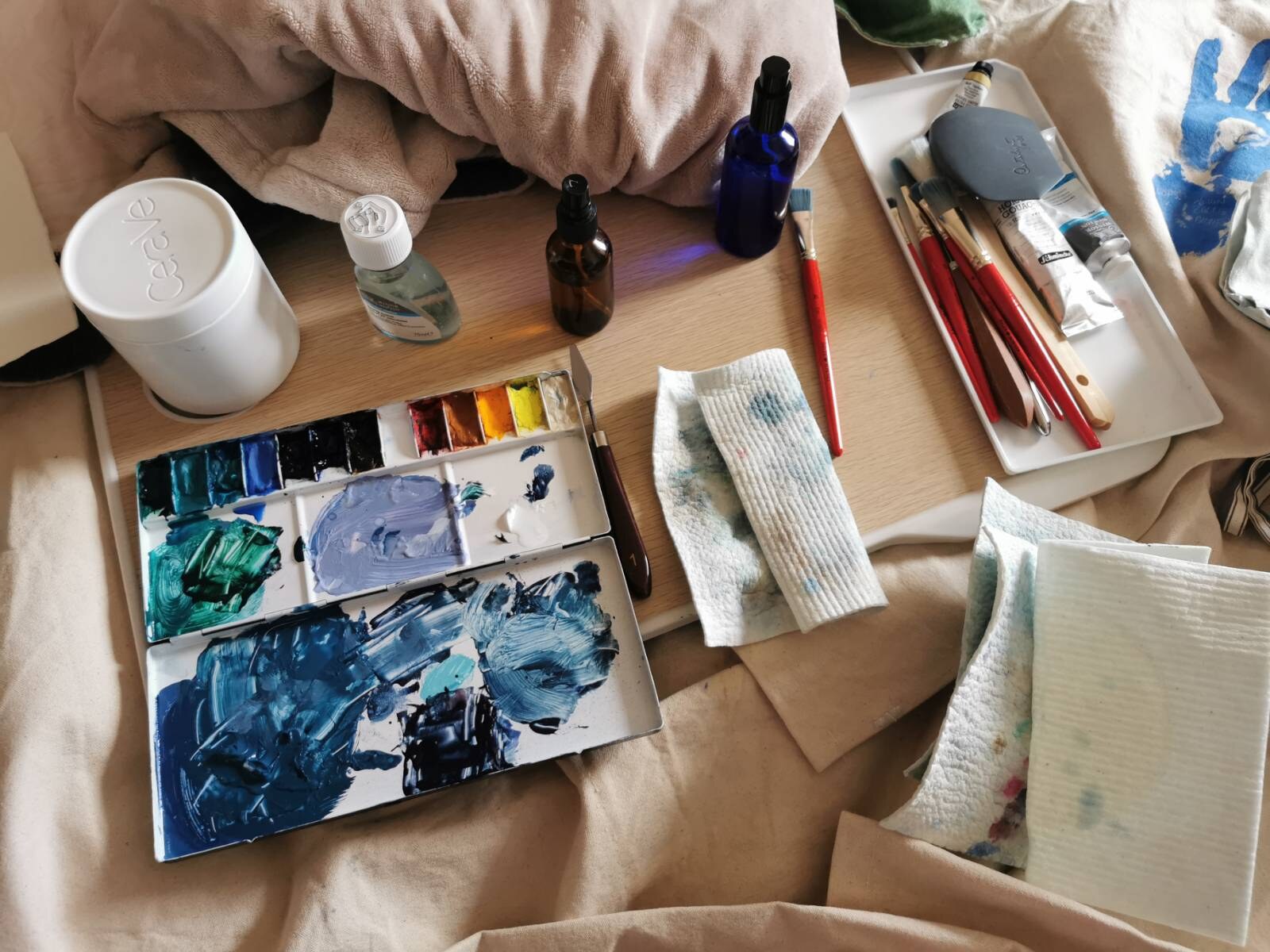
Little did I know this strange cocktail of despair and determination was a blessing in disguise.
My health limitations forced me to stop searching for the “right medium” and to stop looking to other people’s methods… and instead begin paying attention to what I was actually trying to do.
One day I pulled up a composition by one of my favorite painters and decided to make my own version of it. I changed the colors and began working with my own materials, in the method I had slowly, painfully, developed with water media rather than oil paints.
For the first time in weeks, I went into a flow state and got thoroughly lost in the work.
When I came out of it, I looked at my painting and… loved it!
Then I looked at his.
They did not resemble one another. Not slightly.
And… I still liked mine better!
That had never happened to me before!
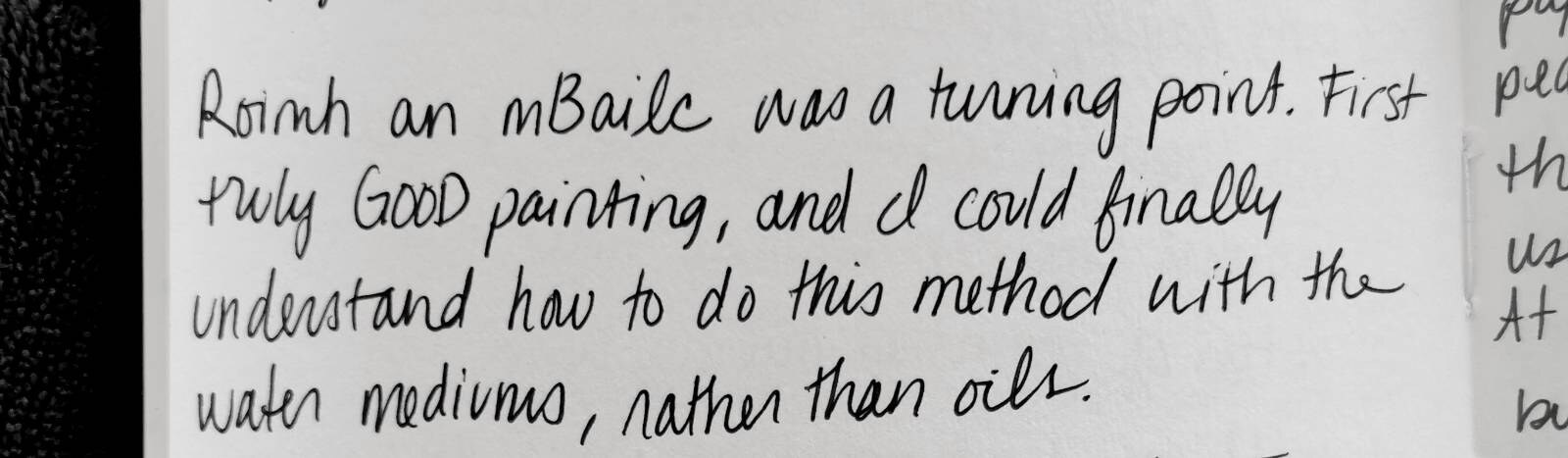
After the initial shock wore off, I began taking the two paintings apart.
His felt like rock and roll. It was stark and rebellious, with something almost confrontational in it. I still loved it. It gave me the same forceful emotional response his paintings often do, a little like being punched squarely in the chest.
Mine was a storm too, but it did not feel dangerous in the same way. It felt like a breath being held before a crescendo. The motion was there, and so was the weather, but everything seemed suspended for a moment. When other people looked at it, they spoke about awe and love.
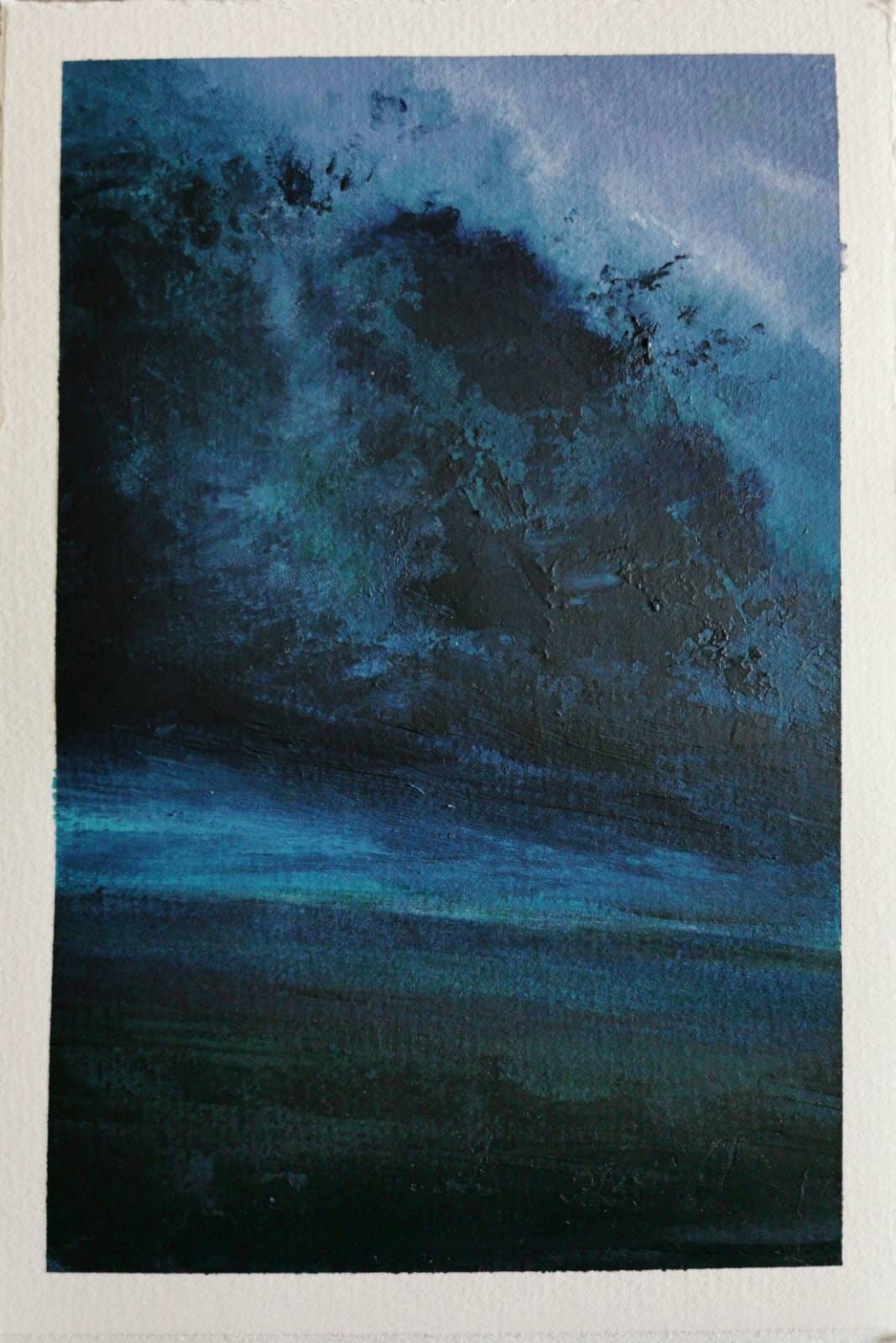
Why had I changed the emotional movement of the painting without deciding to? Why did I prefer the quieter tension of my version? What had satisfied me enough that I wanted to do it again?
Those questions opened the doors of my perception.
Some of the answers were inside the process. I liked bodily contact with a surface, laying paint down and pulling it back, letting an image emerge from the material instead of it melting together into one flat smoothness.
I wanted a method that left evidence of my hand. Those things mattered. If I disliked the activity itself, I would not stay with it long enough to do anything interesting.
But the deeper answer was emotional.
I was drawn to suspension: the intake of breath before something changes, movement held inside stillness, light that opens across the water for a few seconds and disappears. I loved storms, but I was not painting them to create danger. I was trying to make contact with the awe I felt while watching the sky change, the brief sense that an ordinary coastline had opened into another world.
Once I saw it, the same quality began appearing everywhere, going back to my childhood.
Turns out, I had been choosing the same emotional movement since I was a little girl.
The scattered strands started forming a golden thread.
And for the first time, I could enter the labyrinth of a creative project with some sense of what I was looking for. I still get lost. I still make unsuccessful work. Most of what I make does not completely satisfy me, and I expect that will remain true for the rest of my life.
But getting lost stopped meaning that I had chosen the wrong medium or did not have enough talent. I could measure what was happening. I could look at an unsuccessful painting and see that the surface was too smooth, that I need to push the values more to get the atmosphere I craved, or that the image had become loud rather than holding its breath. I knew what I was trying to move closer to.
That made the trouble of making meaningful.
It is difficult to translate something that lives in the mind, the body, the imagination, or the spirit into physical form. The material changes it. Your current skill changes it. Time, space, illness, money, and the size of the table change it.
Knowing your taste does not remove any of that difficulty.
But… it gives the difficulty a direction. It gives you something you love enough to remain a beginner for, to return when the material frustrates you, and to keep trying even when nobody praises the attempt.
This did not give me a tidy definition of my artistic identity. The thread is still revealing itself. I expect to spend a lifetime finding out how many forms that suspended, illuminated moment can take. That is part of the pleasure.
Himeros gives us something large enough to keep approaching through many works, many materials, and many stages of our lives. Each successful contact satisfies us for a moment without exhausting the desire itself.
Later, an allergy to gum arabic took away the water-media method I had developed and genuinely loved. That loss hurt, but it did not return me to the beginning. I had lost one vehicle for my vision. I had not lost the vision itself. For the first time in my life, a substantial challenge did not slow me down.
Instead, I picked up charcoal.
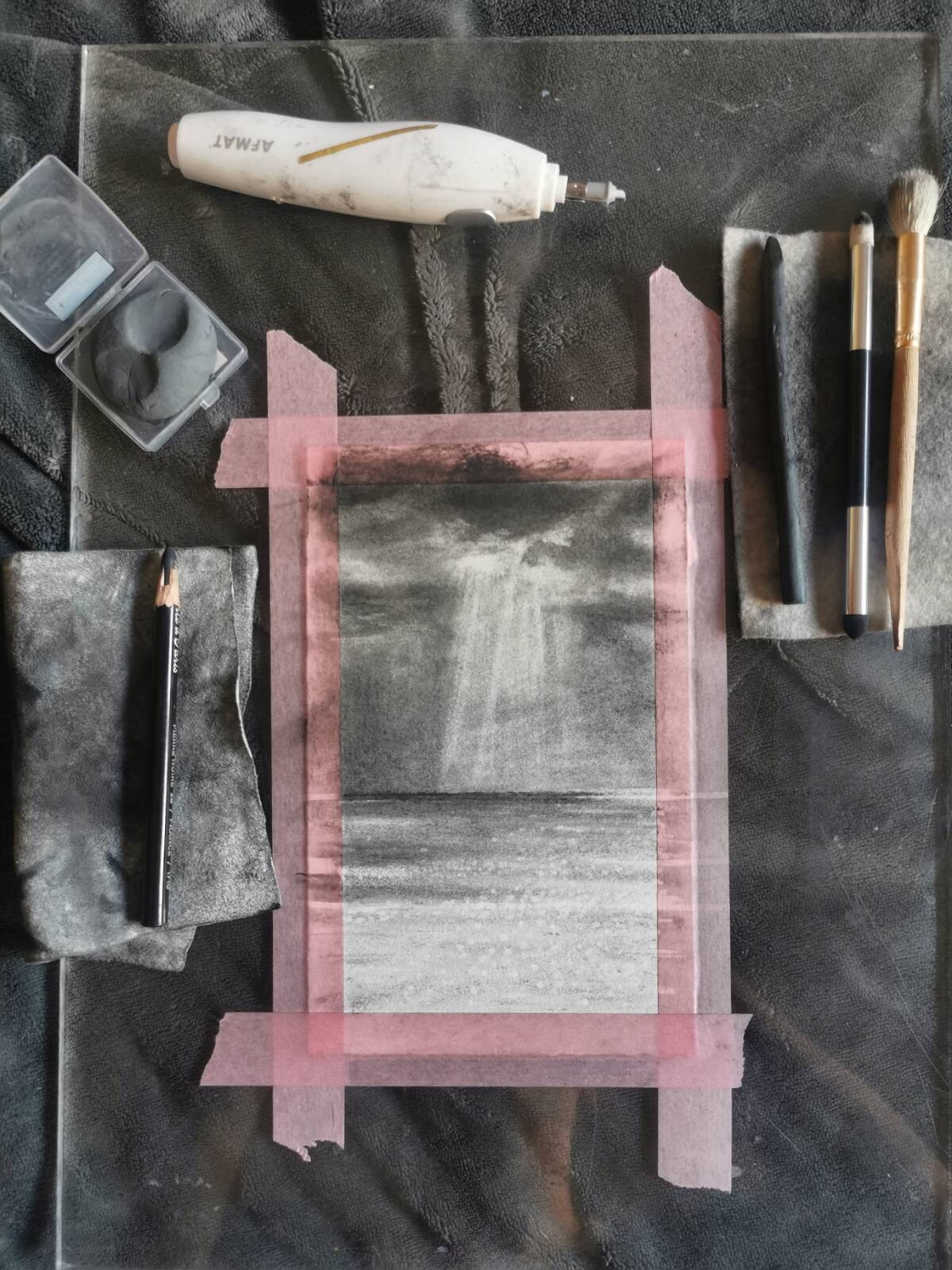
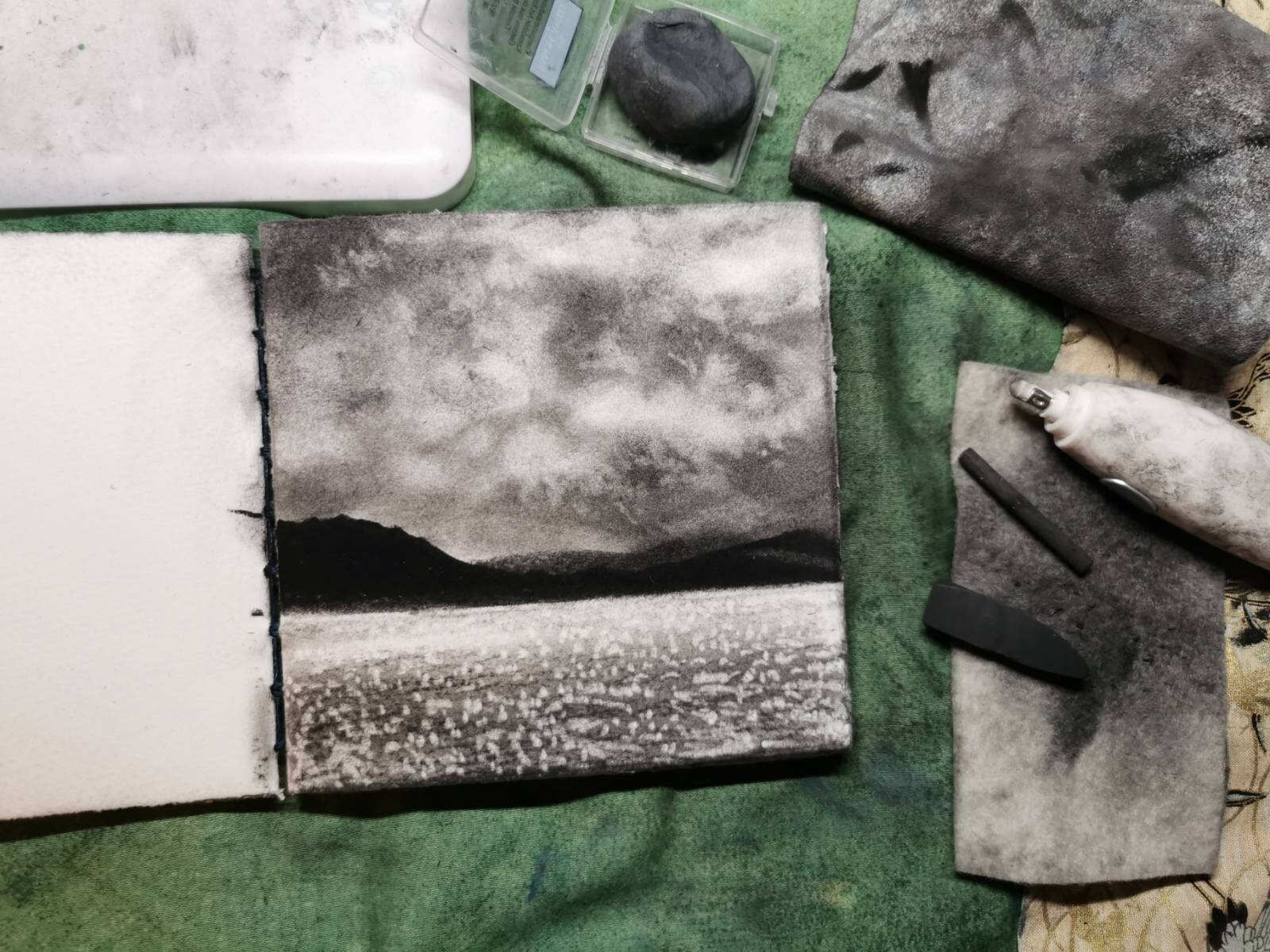
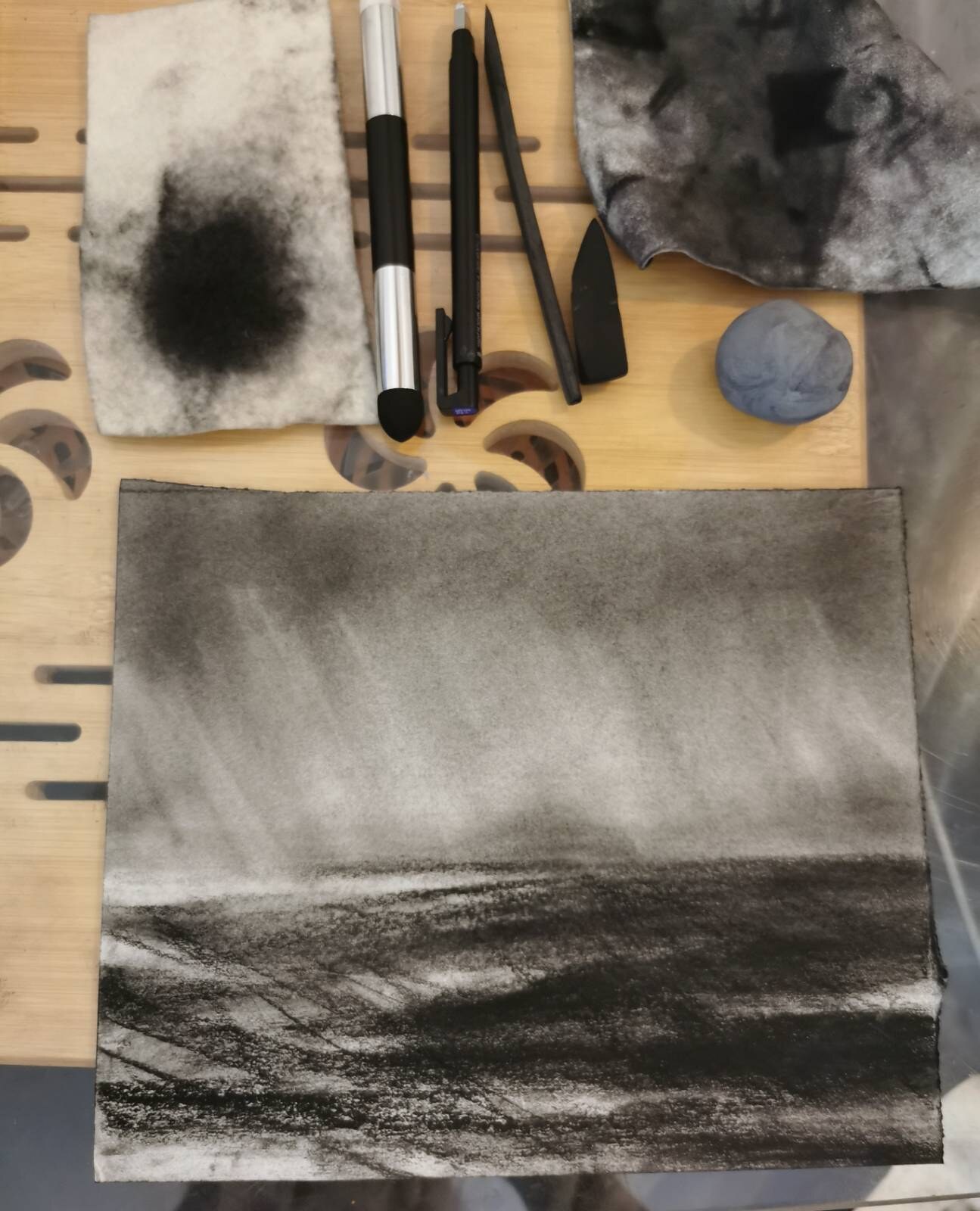
The medium changed, but the thread remained visible. Because I knew what I was pursuing, I could test the material against it and decide which new skills were actually worth learning.
This process—gathering the evidence, identifying the recurring qualities, choosing one strand, testing it against a material, and returning to it—became the foundation of Spinning Gold.
What is Spinning Gold?
Spinning Gold is an eight-week intimate container for makers who want to develop enough trust in their taste to choose processes, materials, influences, and projects capable of sustaining their desire to continue.
This is not another class where I give you a prompt, teach you to make the thing in my way, and then send you home with a folder of lessons.
Each week, I will introduce one Venusian concept that helps us understand something about desire, sensory perception, aesthetic choice, refusal, relationship, scale, or making. Then we will apply it immediately to your own interests, your own materials, and what has been drawing you closer.
You will build a physical archive called a Taste Altar and use it to record the micro-moments in which something catches your attention. You will return to it during the week, not for hours at a time, but often enough to see which colors, images, words, textures, subjects, movements, and creative questions keep appearing.
As those patterns become clearer, you will choose one strand and begin a small project from it. The project will be built at the scale of your actual life: the time you have, the body you have, the materials already in your home, and what can honestly be attempted in eight weeks.
We will do this together, live, among other makers who are also learning to treat their creative attention as something worthy of time, care, and protection.
By the end, I do not expect you to have solved your artistic identity.
You can expect to have a clearer vision of what you are pursuing, a way to record and deepen that vision, and firsthand experience using it to guide a project through the creative labyrinth.
You are ready for Spinning Gold if…
- You have accumulated supplies, classes, saved images, half-started projects, and more possible directions than you know how to choose between.
- You are very good at being a student but struggle to keep making when there is no teacher assigning the next step.
- You start learning a medium, feel the discomfort of being a beginner, and quickly wonder whether your awkward first attempts prove that you are not really an artist.
- You know you are creative, even if the word artist still feels more difficult to claim.
- You are beginning again after illness, grief, care work, burnout, a major life change, or years in which your attention belonged primarily to other people.
- You have several mediums or interests and suspect there may be a deeper connection between them, but you cannot see it clearly yet.
- You believe that making belongs to the sacredness of your life and want to give it more than whatever time remains after everything else is finished.
- You want to make alongside people who will take your creative desire seriously without telling you what your taste should be.
Spinning Gold is built for painters, illustrators, photographers, poets, textile and fiber artists, collage and mixed-media makers, printmakers, ceramicists, sculptors, book makers, and people whose work moves between forms. You do not need to choose one medium before joining.
If your practice depends upon noticing, sensory choice, image, language, or material exploration, there is room for your work here.
You do not need to be a professional. You do not need to sell your work. You do not need a settled medium, a portfolio, or a coherent answer when someone asks what kind of art you make.
You need some curiosity about what has already been getting your attention and a willingness to meet it regularly for eight weeks.
Join Spinning Gold
October 3–November 21, 2026
Saturdays at 1:00 p.m. Eastern / New York time
Eight weeks · Twenty places
Your place includes
- Eight live Saturday gatherings on Zoom, with teaching, short experiments, and generous co-working time
- A private Discord space for companionship, questions, images, and conversation between calls
- Zoom links and any week-by-week reference materials available inside both Stan and Discord
- Call recordings placed inside Stan and Discord within forty-eight hours
- A final download folder containing the complete recording set for you to keep and revisit
- The longer closing Salon: a virtual potluck, PowerPoint party, and celebration of what has begun
A mystical summer camp at your own kitchen table
I keep describing Spinning Gold as a mystical summer camp because it is the closest comparison I have found for the experience I want to create.
Camp placed you inside a small world for a fixed span of time. There were rituals and recurring jokes and things everyone cared about together.
For a while, you were allowed to become completely absorbed without explaining why the thing deserved so much enthusiasm.
Most of adult life arrives already marked as important. The work shift, the appointment, the bill, the person who needs help, the vacuuming that everyone can agree must eventually be done.
Creative time is often left unmarked and therefore becomes easy to move, shorten, or sacrifice.
I want us to mark it on purpose.
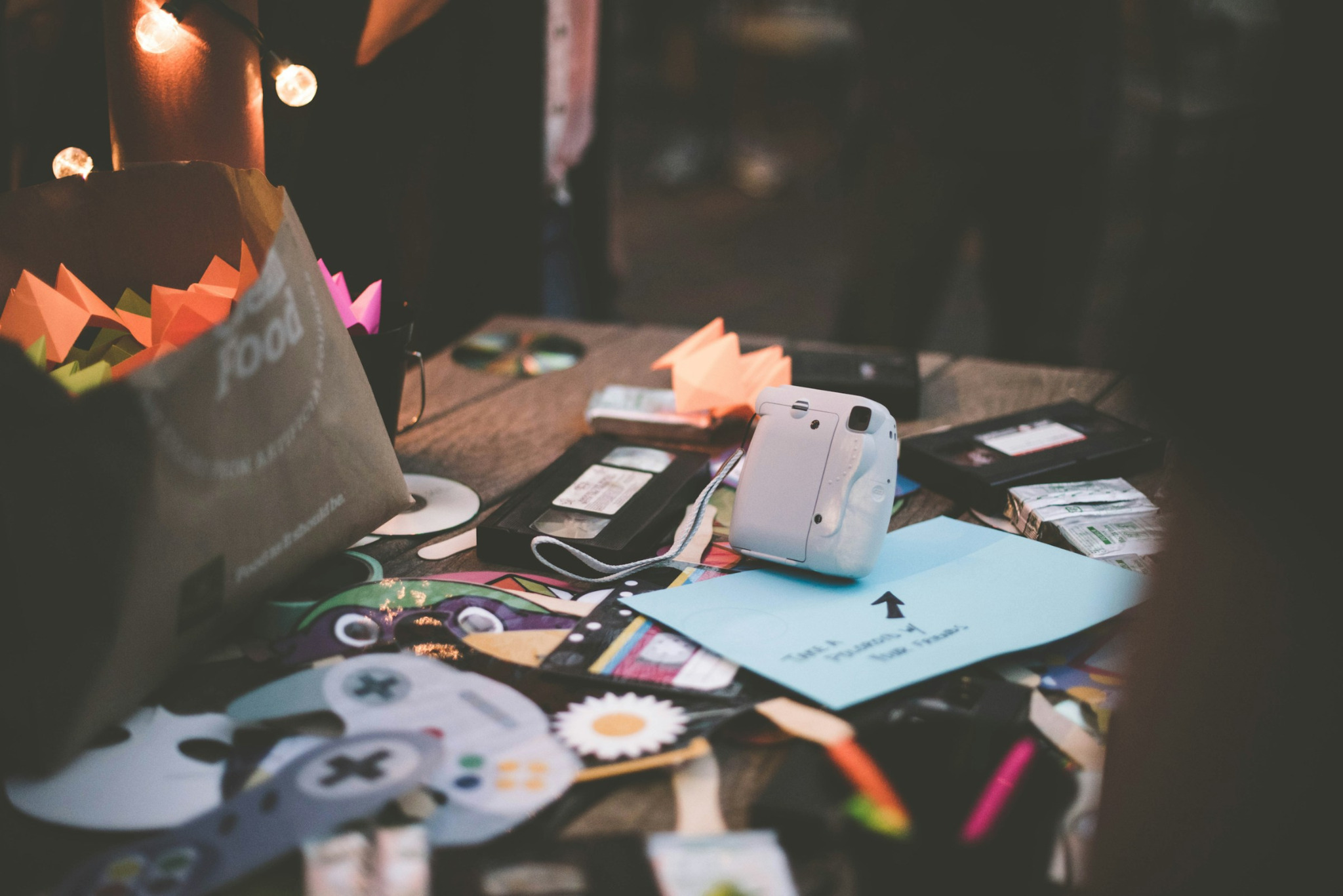
For eight weeks, Saturday becomes a threshold into your creative life. We are creating a ritualized space in which making is given priority and treated as part of the sacredness of your life rather than whatever you might get around to after everything more important is finished.
Each week, we will use one movement from the Homeric Hymn to Aphrodite and the larger Venusian world to move deeper into creative desire: what arrests your attention, how you recognize it, what you refuse, how a large vision becomes something your hands can approach, and what happens when you stay with himeros long enough for it to begin showing you where it wants to go.
Then we use the concept right away.
I may place two images in front of you and ask you to compare them. I may ask you to choose which arrangement creates a stronger sensory response, or to separate what you admire in an artist’s work from what you want from her career. We may look at an idea that feels enormous and practice identifying one piece of it that can be made now.
These are short experiments. Nobody is graded, and there is no correct taste hiding inside the exercise for you to guess.
Most of our two hours is spent creating, exploring, and growing closer to the loves that draw our attention. You may add to your Taste Altar, make a color study, begin the small project, work in a medium you already love, test a material you are curious about, write a poem, print photographs, sort fabric, or spend forty minutes comparing two things you suspect are connected.
Your camera can stay off. Mine will often be off during co-working too. You do not have to speak or show your work. You can mute us and let the room remain open in the corner while you concentrate.
Doing this alongside like-minded, supportive people helps you stay in the trouble of giving your desires attention when you are accustomed to setting them aside or deprecating them. You are still spinning your own thread, but you are doing it in a room where everyone else has also protected this time and entered their work.
Near the end, we return and anyone who wants to can talk about what happened. Sometimes you may have made visible progress. Sometimes you will discover that the color, scale, material, or problem you thought you were pursuing was not actually the part that held you. That discovery also moves the work forward.
The final Salon will be longer than our ordinary meetings so that nobody has to force what she has made into a three-minute presentation. Bring a drink and something to eat. It will feel less like a webinar and more like a potluck held across twenty homes, where we mark the end of camp and celebrate what each person has begun.
The Taste Altar begins with fifteen minutes
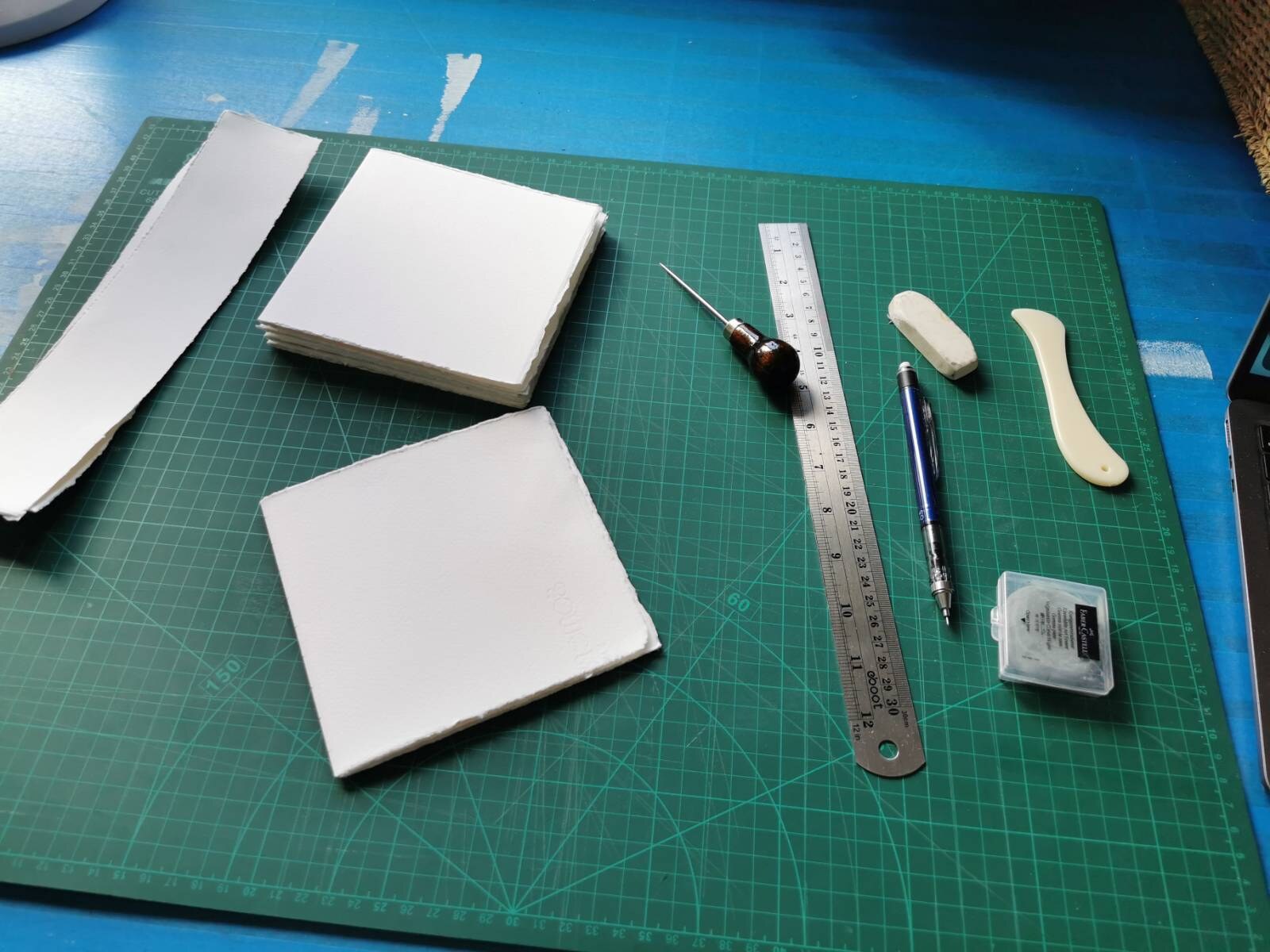
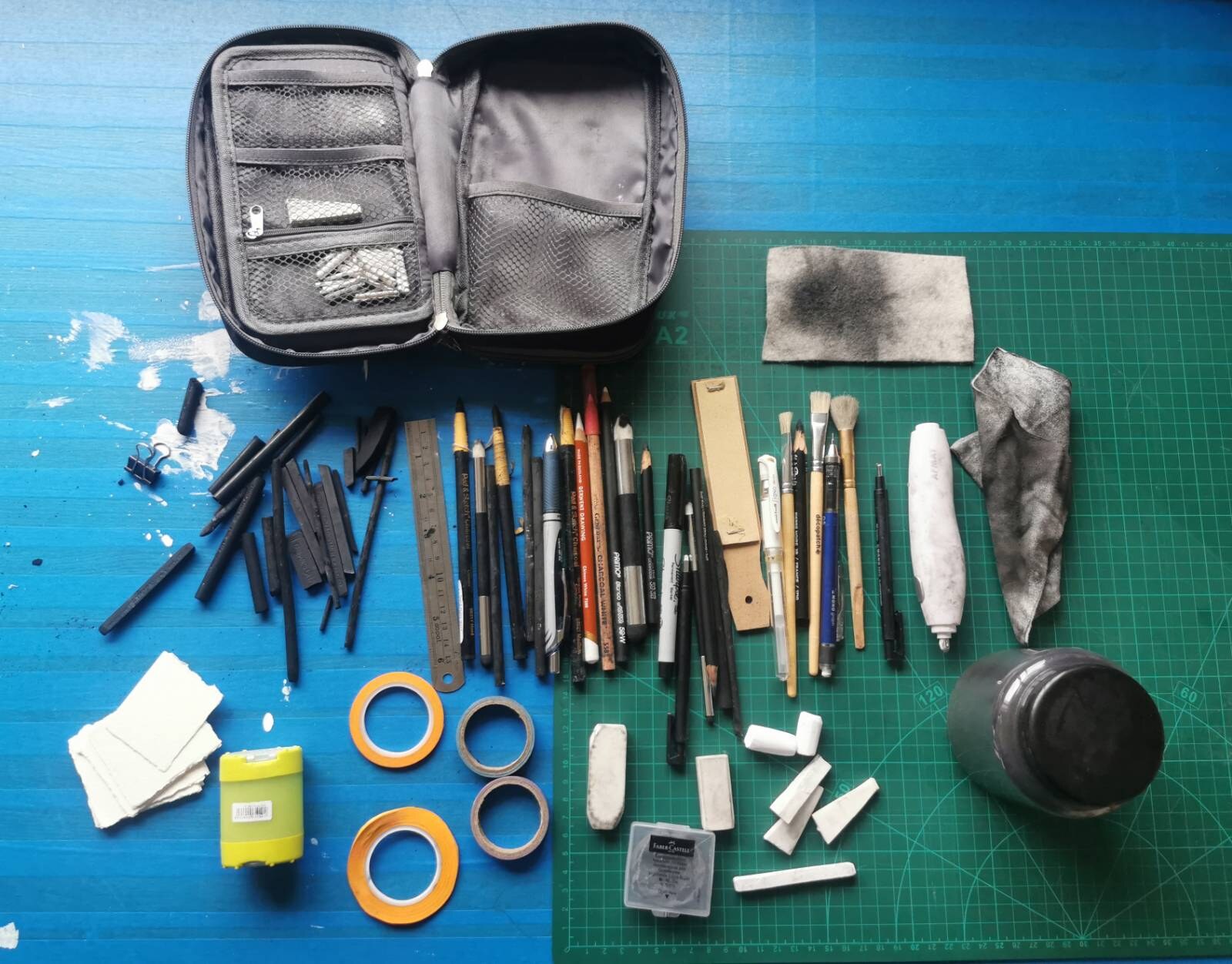
The Taste Altar is a finite physical archive of what arrests your attention.
You can find the source online, but the thing you keep must leave the endless stream. You print the image. You copy the sentence by hand. You make the swatch, tear out the page, tuck the scrap of cloth into a pocket, or write down what you heard.
Otherwise, the Taste Altar runs the risk of becoming another Pinterest board or folder containing three thousand things you liked for ten seconds and never looked at again.
The physical limit matters too. A finite object asks you to choose, arrange, remove, compare, and return. Your hands become involved in giving the attraction a place.
I am using a small A5 ring binder because I want to move pages around, add pockets, take something out, and curate it as my understanding changes. A bound journal can make me weirdly self-conscious. If I make a page I dislike, I either have to live with it or tear it out, and both options can become far more emotionally significant than a piece of paper deserves to be. The binder gets me out of my own nonsense.
You may want a sketchbook you can ruin, an accordion folder, a recipe box, a handmade book, or something made from cloth. The right form is the one that can physically hold the evidence your attention brings home.
A printed image can go into it. So can a color combination, the shape of a shadow, a photograph you took on the way to the pharmacy, a note about the rhythm of a sentence, a pressed thing, a dream image that remained after breakfast, a tiny material test, or a fragment of your old work that still interests you even though the rest of the piece failed.
The practice can take place in as little as fifteen minutes (sometimes less) because these encounters are already happening in micro-moments throughout your day.
The question is whether you stop long enough to catch hold of and record it so you can revisit it again later.
Most of us do not lack things worth noticing. We lack practice remaining with them. Attention behaves like a muscle: it strengthens through use. Each time you record something, move it beside something else, and look again, you practice staying after the first spark instead of saving, scrolling, and forgetting.
This is why I ask for at least four brief returns each week. Fifteen minutes is enough to add something, compare two pages, or write down what you noticed.
Over time, you may realize that several images contain the same verdant green, that you keep choosing crowded compositions with one empty corner, or that almost everything you have gathered feels worn, fogged, overgrown, or partly hidden.
The pattern becomes visible because the evidence is together and because you have looked at it more than once. Every entry says: This was worthy of recording. Every return helps you discover whether the attraction survives attention and what it has in common with the other things you love.
And it is a hell of a lot easier to give an hour to painting once you have some idea what you actually want to paint. Once you know what you are trying to bring into form, you can choose the technique because it serves the vision instead of hoping another class or book or skill will provide one.
Protected beholding is a practice of presence
Within the space of Spinning Gold, when another maker shows you something she loves, she is placing a piece of her interior world in front of you.
It may be unfinished or difficult to explain. It may look small from the outside: two images she cannot stop placing beside one another, a piece of damaged silk, three lines of a poem, a charcoal experiment that failed but exposed something she wants to keep.
We will practice something I call protected beholding.
We slow down long enough to recognize what the maker has actually brought. We can ask questions, reflect what we see, or notice a connection with something she showed us before.
We do not rush into critique. We do not interpret her psychology, announce what her style is, or tell her which thread she should follow. The thread of interpretation and meaning belongs to her.
We know what it feels like to share something meaningful and receive a heart icon, a quick compliment, advice we did not ask for, or silence while the stream moves on. When someone is showing us a piece of her heart, the least we can do is actually be there. And when the room offers that presence back to us, it becomes easier to share work that is still tender, strange, not yet fully explained, or in the middle of becoming.
We do not have to give compliments that we do not mean, nor do we need to pass judgement. The attention itself is the gift. This is one of the ways we will practice charis: the grace, pleasure, and generosity that move between people and call forth a response.
The eight weeks
Across Spinning Gold, we will follow the Homeric Hymn to Aphrodite in sequence. The myth gives us a way to understand what happens after desire takes hold, and every concept will be brought back to the work in front of you.
Week One: Desire before explanation
We begin with himeros: the desire that seizes Aphrodite when she sees Anchises. You will practice allowing that desire to hit and moving toward it (before you try to label it, explain it, or silence it), and begin your physical Taste Altar with what has already been drawing you closer. We notice what has taken hold and give ourselves the chance to look again before jumping to decide meaning.
Week Two: Returning to the senses
After Aphrodite is bathed, anointed, dressed, and adorned at Paphos, the world responds to her sensory presence. We will work with aisthēsis and sensory pleasure, moving beyond broad words such as dark, dreamy, or beautiful and looking at what produces the response: which darkness, what kind of surface, how much space, what temperature, edge, rhythm, color, or pressure. Once you can recognize the sensory qualities affecting you, you can begin choosing them deliberately in your own work.
Week Three: Recognition through comparison
Anchises knows he is looking at someone extraordinary, but he does not know who she is. He tries to identify her by comparing and contrasting her with the goddesses and spirits he knows. We will use admiration and jealousy in the same way. What precisely produces the charge: the surface, subject, scale, skill, permission, or the life surrounding the work? Comparison helps us recognize what is actually speaking to us without trying to swallow another artist’s life whole.
Week Four: Making the vision bearable
Aphrodite cannot approach Anchises in the full, unbearable force of divinity. She must come in a form a mortal can perceive. Our largest creative ideas also need a form our present hands can approach. We will work with persuasion, scale, and refusal: what belongs in this attempt, what must be set aside for now, and which small piece can carry the larger quality? Narrowing gives your time, body, materials, and current skill something they can answer without pretending the greater vision has been exhausted.
Week Five: The loves that have stayed with you
As Aphrodite and Anchises move toward intimacy, we will work with philotēs, the bond of affection and closeness, and look back toward adolescence, when many attractions were easier to follow before usefulness and public identity were piled on top of them. This week you will trace the images, stories, places, artists, materials, and early obsessions that have kept returning in different forms. This is often where separate interests begin revealing the golden thread already running through them.
Week Six: Temporary devotion
We turn to mixis: mingling. A desire meets a material. An old influence meets your present body. An idea moves through the hand and becomes something you could not have planned exactly. By now, your Taste Altar will contain enough evidence for you to choose one strand and give it temporary devotion through a small project. You are not declaring your forever style! You are closing ten doors for the moment and entering one long enough to explore what is inside.
Week Seven: The material answer
After their intimacy, Aphrodite reveals herself and Anchises finally understands the scale of the power that has been standing before him. We return to divine inspiration and mortal measure. You can see farther than you can currently make, and that distance gives you somewhere to keep going. We will work with epiphaneia, appearance or revelation, and agalma, a material object through which something luminous is made present. Then we will spend most of our meeting making and allowing the material to answer the vision.
Week Eight: The Salon of Small Worlds
Aphrodite becomes pregnant with Aeneas. What began as desire produces a life, and their brief meeting acquires a form that outlives it. We close with charis: grace, pleasure, generosity, and the gift that calls forth a response. Our final Saturday will be longer than usual: a virtual potluck, PowerPoint party, and small celebration ceremony. Each person may show what became more visible through eight weeks of attention. Finished and unfinished work are equally welcome. We will behold what has begun and mark the threshold together.
What eight weeks can change
Spinning Gold will not settle every question in your creative life.
After eight weeks, I want you to take the small moments of attention more seriously because you have seen what happens when you collect them. I want you to be able to name more precisely what produces a sensory response in you and recognize the connections between interests you have been calling scattered. I want you to have chosen one project without asking that choice to define you forever or be the final representation of your grander source of inspiration.
Most of all, I want you to have practical experience moving through the full sequence: desire, attention, gathering, comparison, refusal, choice, material contact, revision, and being witnessed.
That sequence matters because it is repeatable.
The next time you re-enter the creative labyrinth, you will still encounter uncertainty. You may still have more ideas than time. The first attempt may still be awkward, and the material will continue doing things you did not ask it to do.
But you will have a golden thread that can help you navigate that labyrinth.
You will have an idea of how to gather the evidence of what you love, look for the qualities that recur, choose one piece of the larger vision, and measure progress according to what you are actually trying to create. You will know that being lost for an afternoon does not mean you have been expelled from the labyrinth. You can look for the thread and continue.
Over time, your voice, process, priorities, and artistic identity begin to coalesce through that return. They become visible because you have made enough choices, and contact, to recognize yourself in them.

Who is holding the room?
Meet Amaya
I’m Amaya Rourke, a painter, writer, and longtime teacher living on the Dingle Peninsula, at the wind-blown western edge of Ireland. My work begins in the studio: with storm light, sea weather, chronic illness, material limitation, and the daily practice of making something by hand.
Spinning Gold grows from my own long return to painting and the practice I had to build from the body, materials, limits, and life I actually have. I will not tell you what your art should become. I will help you pay closer attention to the desire already trying to lead you there.
Questions other makers have asked
Open any question to read the answer.
Do I need to call myself an artist?
No. You need to care about making and want a more trustworthy relationship with your taste. You may be at the beginning, returning after years away, or working seriously without any desire to make your work public.
Is this a technical art class?
No. I will teach practices for noticing, gathering, comparing, articulating, choosing, and translating taste into material decisions. I will not teach one medium or give the whole room an identical project.
The work we do may show you which technical skills would actually serve your vision. That makes it much easier to choose your next class without asking the class to tell you who you are.
What kinds of makers is this for?
The container is built with physical makers at its center: painters, textile and fiber artists, collage and mixed-media makers, photographers, book makers, sculptors, ceramicists, and people whose work moves between forms.
Poets are also especially welcome. Poetry depends upon noticing, emotional and sensory precision, rhythm, image, and the ability to preserve what another person might pass without seeing. The Taste Altar gives a poet one place to keep those images, overheard phrases, sounds, dream fragments, and small observations so they can be revisited and brought into new relationships.
Other writers and interdisciplinary makers can also join if this practice of attention, sensory taste, and gathering speaks directly to how they work.
What if I work in several mediums?
You are not required to choose one forever. We will look for the desires and qualities passing between your interests, then choose one temporary project in which to explore them. Your mediums may be less disconnected than they currently appear.
What materials will I need?
Begin with what you already own! Your Taste Altar might be a sketchbook, binder, box, accordion folder, handmade book, or another object suited to what you gather. Your small project should also begin with the materials and space available to you.
Before our first meeting, I will send a small pre-class invitation with examples and suggestions, along with the materials I am using to build my A5 binder. You can use the list if it helps. You do not have to buy those things.
How much time will this take?
Our regular Saturday meetings last two hours. The final Salon will be longer so that everyone has time to share without being rushed.
Between meetings, I ask you to return to the Taste Altar at least four times. Fifteen minutes counts. The small project will ask for additional making time during Weeks Six and Seven, but we will begin it inside our co-working sessions and keep its scope grounded in your actual capacity.
What if I miss a live meeting?
Calls will be recorded and made available within forty-eight hours inside both Stan and Discord. You can listen in your own time; watching the video is optional unless you personally find the visual context useful.
You will get the most from Spinning Gold by attending live whenever you can. The co-working, co-regulation, body-doubling, conversations, and experience of beholding other makers cannot be fully reproduced by a recording. The recording is there to keep one missed Saturday from becoming a reason to disappear.
Near the end of the container, I will also send every participant access to a folder containing the complete set of recordings. You may download them, keep them, and revisit them as often as you want.
Missing a week does not mean you have fallen out of the container. You return at the next point available to you.
Do I have to be on camera or share my work?
No. Cameras and sharing are optional. I do not enjoy being on camera constantly either, and I will possibly turn mine off during much of the co-working time.
I encourage you to find a form of participation that is comfortable enough to be possible and active enough to let you feel part of the room. You might speak during an exercise, share one image in Discord, keep the live call open while you work off-camera, or bring something unfinished to the Salon.
Do I have to use Discord?
No. The private Discord space is optional. It is there for the people who want companionship between Saturdays, somewhere to place a question or image, or another way to participate when speaking on camera feels difficult.
Do I have to worship Venus or believe in the Greek gods?
No. The Venusian cosmology gives us a rich way to understand desire, sensory perception, relationship, beauty, refusal, and making. The brief devotional practice helps us give creative time a sacred boundary.
I recommend that you participate in the ritualization of the space because that is part of how we protect it from being treated as optional.
Is this designed for people with chronic illness or variable capacity?
I am a chronically ill maker, and I have built the container with the understanding that bodies and weeks vary. The Taste Altar can be tended in fifteen-minute periods. Calls are recorded. Cameras are optional. Unfinished work is welcome at the Salon.
The live experience matters, but a low-capacity week does not undo the work! Learning how to return after interruption is one of the practices we are building.
What is the refund and cancellation policy?
There are no refunds or cancellations after registration. I am a small maker holding twenty places for the full eight weeks. Please read the page carefully and make sure the dates, investment, and nature of the container are right for you before joining.
If you are ready to give your creative desire eight weeks of sustained attention, I would love to welcome you into Spinning Gold.
Join Spinning Gold
An eight-week Venusian container for makers
Saturdays, October 3–November 21, 2026
1:00 p.m. Eastern / New York time
Twenty places
Enrollment closes October 10